
A Hand I Won on a Poker Tell, and One I Lost on a Fake One
Poker tells are the small physical or behavioral signals a player gives off that hint at the strength of their hand, and I used to think I was decent at reading them. Then I played two hands in the same live session at a card room outside Tallinn last spring — one where a timing tell won me a stack, and one where I invented a tell that wasn't there and paid for it. Both hands taught me more about poker tells than any list of "20 tells to watch for" ever did.
It was a Tuesday night, 2/5 no-limit, a table full of regulars I half-recognized and one loose tourist three seats to my right. I'd been card-dead for an hour, stuck about 300, and the room had that flat, late energy where everyone's just waiting for a hand to happen. Then one did.
I opened AQ from the cutoff, the tourist called from the big blind, and the flop came Q-7-4 rainbow. He checked, I bet, he called without much of a pause. Turn was a 9. He checked again — but this time there was a beat, maybe two full seconds, before his hand actually moved toward his chips. I'd played with him for maybe forty minutes, and everything about him so far had been fast and automatic, the kind of guy who calls before you've finished talking.
The Hand That Made the Read
- PREFLOP
I open AQ from the cutoff, the loose tourist in the big blind calls.
- FLOP
Q-7-4 rainbow. He checks, I bet with top pair, he calls with no real pause.
- TURN
A 9 falls. He checks again, but this time there's a two-second delay before his hand moves — off rhythm for a player who'd been fast and automatic all night. I bet again, reading the timing shift as weakness.
He tanked and folded to the turn bet. Never saw his hand.
Mistake: No mistake — but no confirmation either, since he folded before showdown.
Correct line: Betting into the timing tell was reasonable given his established fast rhythm, though the read stayed unconfirmed.
That hesitation was the whole hand. It wasn't a physical poker tell — no shaking hands, no held breath, nothing you'd catch on a highlight reel. It was a poker timing tell: a small deviation from his own established rhythm. Fast players who suddenly slow down are often thinking about folding, not raising. I bet again, he tanked for real this time, and folded. I never found out what he had, and that's the honest, unsatisfying truth about most of these reads — you rarely get to check your work.
Two Hours Later, I Undid All of It
This is the part I'd rather leave out, but the whole point of writing this down is not leaving it out. Same session, different opponent — a tighter, quieter guy who'd been three-betting me twice in twenty minutes. Third time, I had KJ suited, and I called out of position, already annoyed and a little card-dead myself by then. Flop missed me completely. He led out small. I remembered, or thought I remembered, that his stack hadn't moved as smoothly as usual — a slight delay before he pushed the bet forward — and decided that was a poker betting tell for weakness, a blocking bet from a hand that didn't want to get raised. (see tell (poker)).
I raised. He shoved instantly, no hesitation at all, and I called anyway because I'd already convinced myself of the read. He had aces. The "tell" I saw wasn't a tell — it was me, tired and card-dead for two hours, pattern-matching a random half-second delay onto a story I wanted to be true. That's the risk with reading poker tells live: you're not just reading the other player, you're reading your own mood into the gaps, and after a long session those gaps get wide enough to project almost anything into them.
The One Line I'd Underline
What Actually Held Up: Reading Physical Poker Tells
Looking back over a few years of live sessions, the physical poker tells I've actually gotten value from are narrower than any list makes them sound. A genuine shift in breathing pattern on a big river bet. Chip-stacking that gets noticeably neater or messier than a player's default. Eye contact that either suddenly appears or suddenly vanishes right after a bet goes in. None of these are reliable alone — I'd guess I'm right maybe six times out of ten when I act on one, and that's being generous with my own memory.
Online, you obviously lose all of that, which is why online poker timing tells matter so much more on the sites I play now. Bet-sizing patterns, how long a decision takes relative to a player's own average, whether a snap-call shows up on a scary board — these are poker tells too, just measured in milliseconds instead of body language. A three-second pause before a check on a coordinated board reads differently than a three-second pause before a check on a dry ace-high flop, and only tracking a player over time tells you which is which. (see betting in poker).
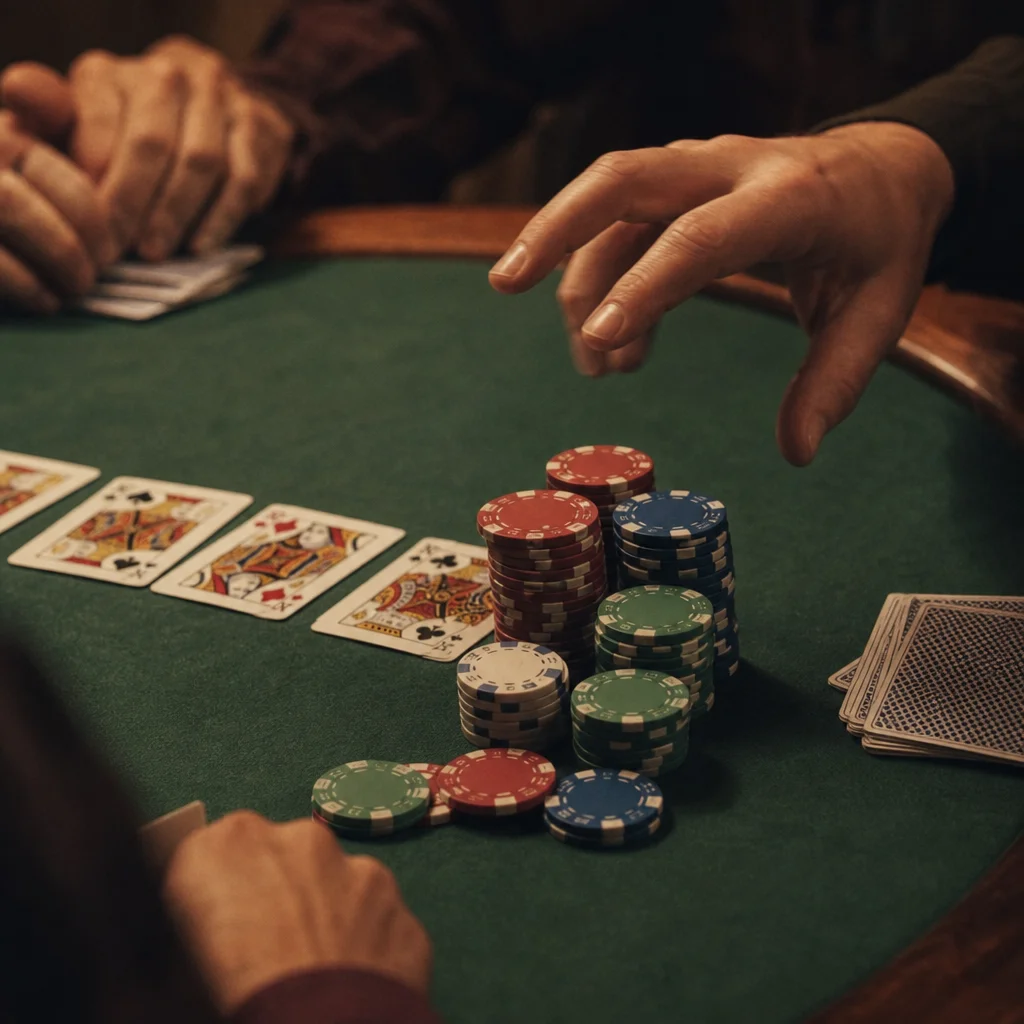
For what it's worth, none of this replaces the boring stuff — bankroll discipline and not playing hands you already know are marginal cover a lot more of your results than any read ever will. I've written more about the tilt side of that on the tilt page, and the broader strategy questions — ranges, sizing, table selection — belong on the online poker strategy page, not here. This entry is just about the two hands.
If I'm honest about what I'd do differently, it's not "read more tells" — it's trust the ones I've actually tracked over time and throw out the ones I invent when I'm tired. I probably won't always manage that. The KJ hand happened again, in a slightly different shape, about two months later — and I still called.