Discipline Beats Talent: My Pre-Session Ritual
It's 8:47 on a Tuesday and I'm sitting at my desk with four tables open, and I haven't clicked a single button yet. That pause is the whole point. The poker mental game isn't some abstract idea I read about in a forum thread years ago — it's a checklist I actually run through before I let myself take a seat. Sleep, stop-loss, session length, quit trigger. In that order, every time, or I don't play. It sounds simple written out like that, and it is simple. Simple isn't the same as easy.
I used to think discipline in poker meant gritting your teeth through a bad beat. It doesn't. It means deciding things in advance, when you're calm, so that later — when you're not calm — the decision's already made and you just have to follow it. That's the whole trick, and it took me embarrassingly long to learn it. I spent something like four years re-learning the same lesson every few months: play tired, play stuck, play too long, lose more than the swing justified, promise myself I'd fix it, and then not fix it for another six weeks. (see tilt (poker)).
The Four Things I Check Before I Sit Down
First, sleep. If I've had under six hours, I don't play — full stop, no exceptions, no "just one table to see how I feel." Poor sleep doesn't just make you tired; it quietly wrecks the exact judgment the poker mental game actually runs on, and a solid poker mindset starts with something as unglamorous as a bedtime. I've tested this on myself more times than I'd like to admit, and the pattern's consistent: bad sleep, worse decisions, usually without me noticing in the moment.
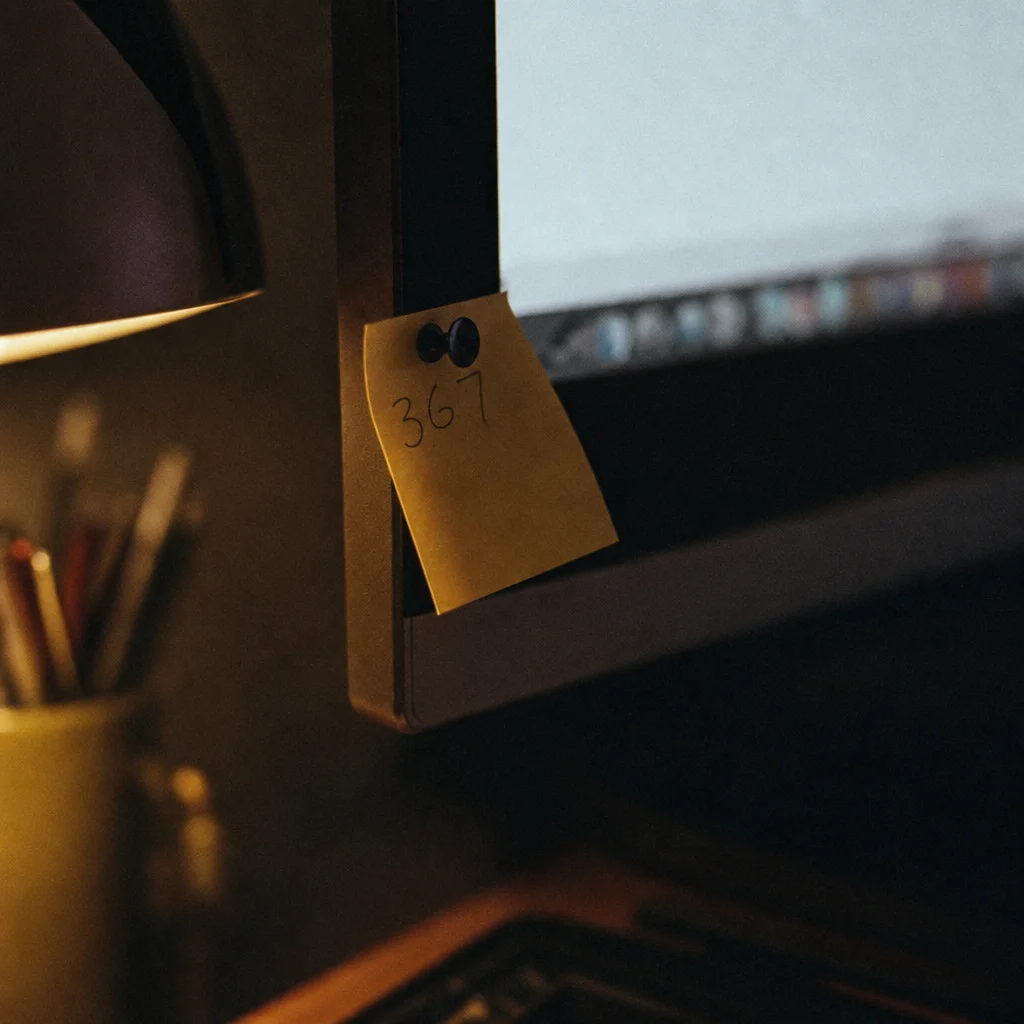
Second, stop-loss. I set a number before I sit down — say, three buy-ins — and I write it on a sticky note on my monitor, because a number in my head bends under pressure and a number on paper doesn't. Third, session length: two hours, then a mandatory quick check-in with myself, win or lose. Fourth, the quit trigger — a specific feeling, not a specific result, that tells me I'm done regardless of the stack.
The decision was already made at 8:47am — the version of me at midnight down three buy-ins just has to follow it, not make a new one.
Here's the part nobody puts in a highlight reel: the quit trigger isn't "I'm stuck." It's "I've re-read the same three lines of a hand history twice and I'm still not sure what I'm looking at." That's the tell. Not the stack size — the fog. I've written about what happens when I miss that signal entirely; that particular blow-up belongs to a different entry, and if you want the ugly version, it's over in my tilt post.
None of these four checks are clever. Sleep, stop-loss, session length, quit trigger — a beginner could write this list on day one. The hard part was never knowing the list. It was trusting it more than I trusted whatever I was feeling at 11pm with three buy-ins gone, and that kind of trust only builds after you've watched the sticky note save you a few dozen times in a row. That's poker discipline in practice, not in theory — it's boring, repetitive, and it works precisely because it doesn't ask you to feel strong in the moment. (see problem gambling).
Is poker a mental game more than a card game? After a few thousand hours, I'd say the cards are the easy part. Learning starting hand ranges takes a few weeks. Learning to stop when the sticky note says stop takes years, and honestly, I still fail at it sometimes — I'm not going to pretend I've solved it, because I haven't. What changed wasn't my hand-reading; it was how boring I let the routine become. Boring, in this context, is a compliment.
The mental game of poker also shows up in how I handle a good session, not just a bad one. Running hot makes you sloppy in a different way — you start believing the sticky note doesn't apply to you tonight. It does. I've given back more from over-confident good sessions than I ever have from disciplined stop-losses on bad ones, and that surprised me the first time I actually tracked it in a spreadsheet instead of trusting my memory, which, it turns out, remembers the wins a lot more generously than the losses.
None of this fixes a real downswing, and I'm not going to pretend a stop-loss makes a multi-week losing stretch feel good. That's a longer, uglier story I've told elsewhere — the downswing entry covers what six weeks of red actually does to a person, and it isn't pretty reading. This ritual is smaller than that. It's just the thing I do before I sit down, every day, so the bigger collapses happen less often, not so they never happen at all.
What would I change? Honestly, I'd like to say I've refined this into something perfect, but I still skip the check-in at the two-hour mark more often than I should, especially when I'm winning. I know that's the exact moment it matters most. I probably won't fix that this month either — I'm just writing it down so it's on the record, the same way I log everything else here, wins and losses both, because a diary that only shows the good nights isn't a diary. It's a highlight reel, and I've got no use for one of those.